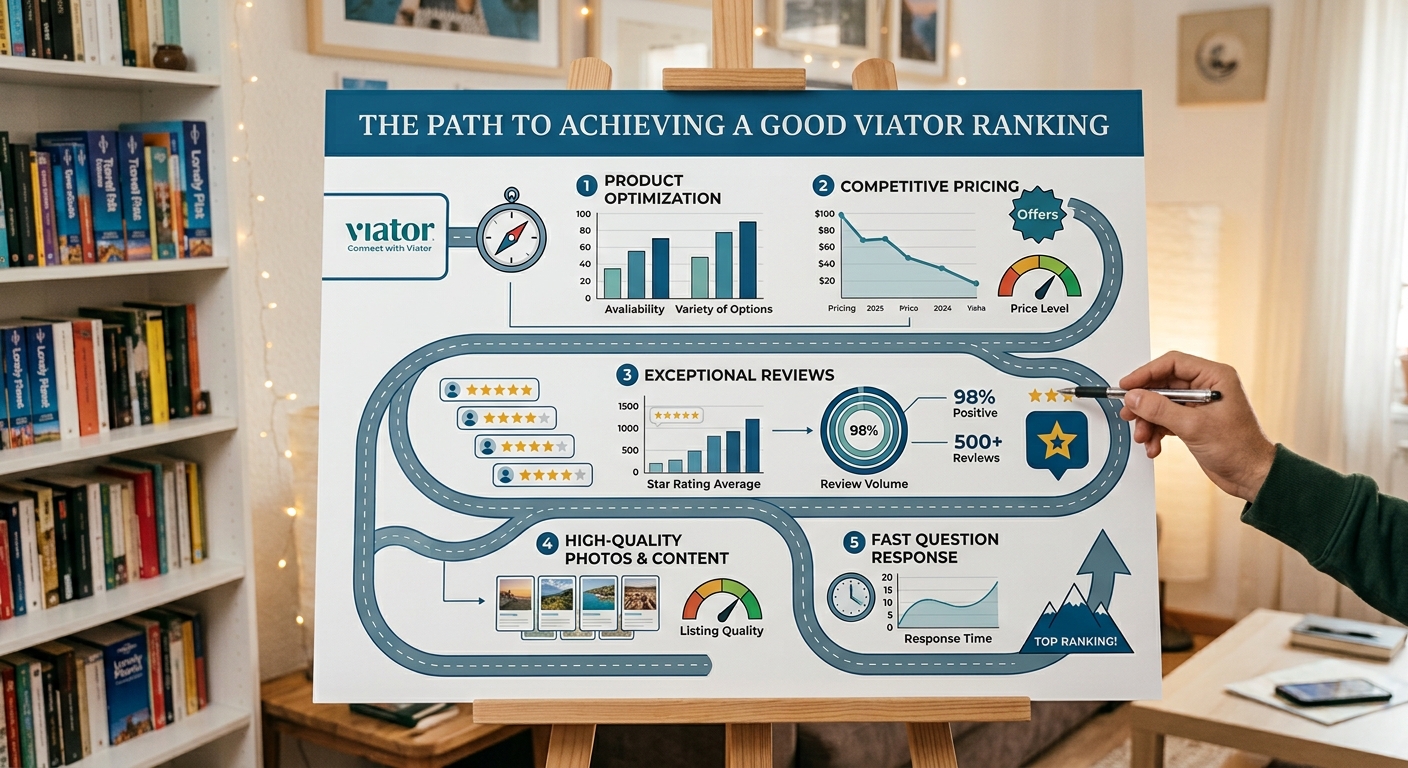
Achieving a strong ranking on Viator takes time, consistency, and an excellent customer experience. Discover how reviews, photography, service quality, and small details can help your tours stand out from the competition.
Building a strong position on platforms like Viator does not happen overnight.
Many tour operators see competitors with hundreds or even thousands of reviews and assume it is impossible to compete. But the reality is that growing within the platform is absolutely possible — although it usually requires time, consistency, and strong attention to detail.
Ranking on Viator is not only about “having a good tour.” The platform evaluates multiple factors related to quality, conversion, customer experience, and trust.
The good news is that many of those factors are fully under the operator’s control.
Patience Is Part of the Process
One of the most common mistakes is expecting fast results.
Many tours take months — and sometimes years — to build:
- history,
- booking volume,
- reputation,
- reviews,
- and platform authority.
In highly competitive tourist destinations, growth is usually gradual.
It is important to understand that Viator prioritizes experiences that consistently generate:
- customer satisfaction,
- low cancellation rates,
- strong conversions,
- and happy travelers.
That is why consistency is often more important than trying to grow too quickly.
Reviews Are Probably the Most Important Factor
If there is one element that can completely transform a tour’s performance, it is reviews.
Reviews help:
- build trust,
- improve conversions,
- increase visibility,
- and strengthen platform ranking.
Travelers constantly read reviews before making a reservation.
A tour with:
- many reviews,
- recent feedback,
- authentic customer photos,
- and strong ratings
will usually have a major advantage over similar competitors.
Make It Easy for Customers to Leave Reviews
Many guests are satisfied with their experience… but simply forget to leave feedback.
That is why creating small strategies to encourage reviews naturally is extremely important.
Some practices that work very well include:
- Having the guide politely mention the importance of reviews.
- Asking drivers or staff to remind guests at the end of the service.
- Placing QR codes inside vehicles or boats.
- Sending automated follow-up messages after the tour.
- Sharing direct review links.
- Asking for feedback in a natural, non-aggressive way.
Sometimes a simple reminder can make a huge difference.
The Experience Itself Still Matters Most
No marketing strategy can compensate for a poor customer experience.
Tours that grow consistently usually provide:
- strong organization,
- punctuality,
- excellent customer service,
- clear communication,
- friendly guides,
- and smooth logistics.
Small details often become the best reviews.
In many cases, travelers remember not only the activity itself, but:
- how they were treated,
- how easy the process felt,
- or how professional the entire experience seemed.
Photography Can Completely Change a Tour’s Performance
Many operators underestimate the importance of photos.
On platforms like Viator, images are a fundamental part of the purchasing decision.
The best photos usually:
- create emotion,
- show the real experience,
- have strong lighting,
- feature people enjoying the activity,
- and help travelers imagine themselves there.
In many cases, better photography can significantly increase conversion rates.
A Strong Description Also Makes a Difference
Many tours use generic or overly short descriptions.
The goal should not simply be to “describe” the tour, but to help travelers understand:
- what makes the experience special,
- what is actually included,
- what the atmosphere will feel like,
- and why it is worth booking.
It is also important to:
- provide clear information,
- avoid confusion,
- explain restrictions,
- and answer common questions directly in the listing.
Differentiated Tours Often Perform Better
In saturated markets, generic tours usually compete mainly on price.
Unique experiences, on the other hand, often generate:
- better reviews,
- stronger conversions,
- and more satisfied customers.
Examples include:
- small group experiences,
- private tours,
- cultural immersion,
- personalized attention,
- exclusive access,
- included photography,
- or unique destination experiences.
Standing out is often less about being the cheapest option and more about offering something memorable.
Cancellation Rates Also Matter
Platforms highly value operational reliability.
Frequent cancellations can negatively impact:
- rankings,
- customer trust,
- conversions,
- and the overall user experience.
Maintaining organized operations and updated availability is essential for building long-term reputation.
Rankings Are Built Gradually
Many of today’s top-ranked tours started with very few bookings and reviews.
The difference usually came from:
- consistency,
- quality,
- customer care,
- and continuous improvement.
Growth on Viator often feels slow at first, but over time positive experiences begin creating a compounding effect.
More reviews generate more trust.
More trust generates more bookings.
And more bookings generate even more reviews.
Final Thoughts
Building a strong ranking on Viator requires patience, strategy, and consistency.
There is no magic formula and no instant success.
But operators who:
- deliver excellent experiences,
- pay attention to details,
- encourage reviews,
- use strong photography,
- and maintain professional operations,
usually stand out over time.
In tourism, digital reputation is built one experience… and one review at a time.