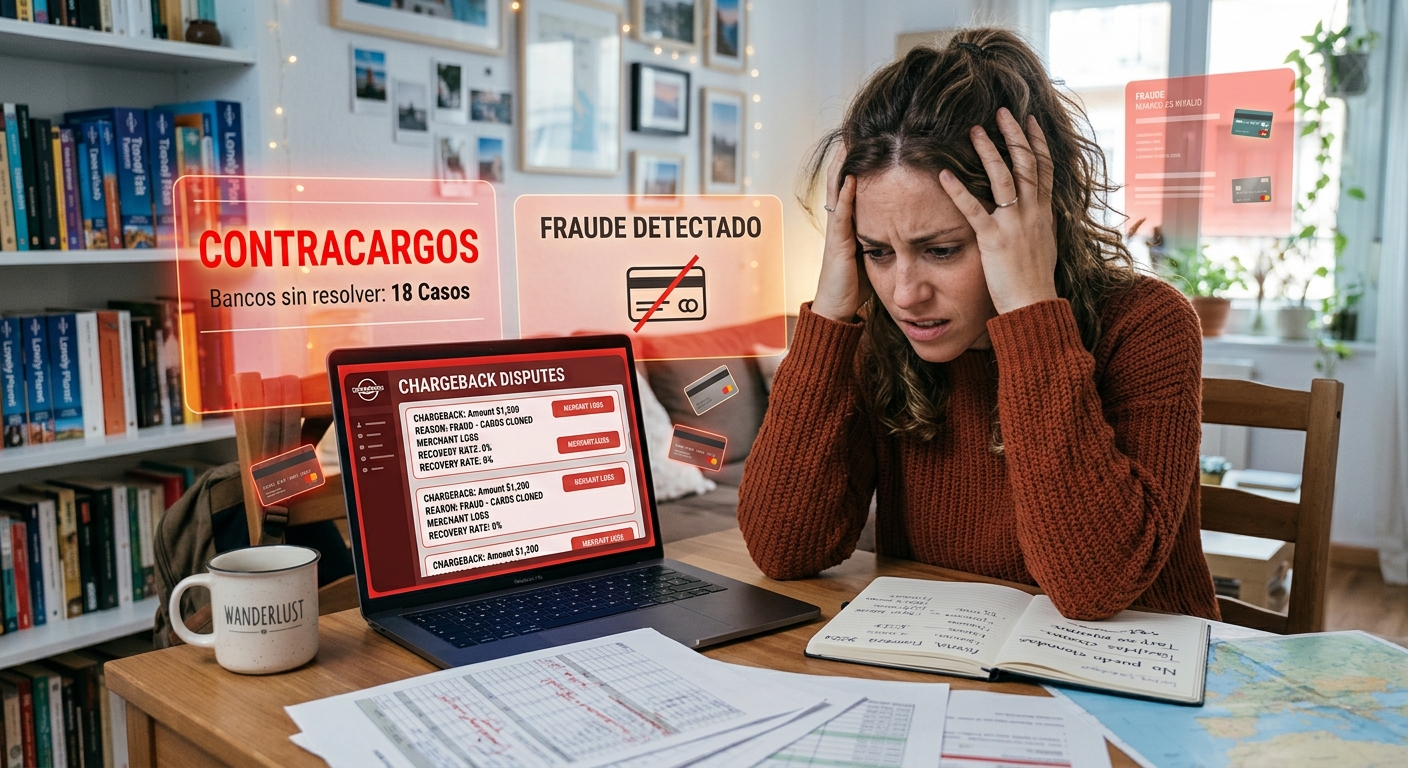
Credit card fraud and chargebacks can quickly become one of the most expensive operational problems for a business.
In the tourism industry, credit card fraud and chargebacks can quickly become one of the most expensive operational problems for a business. It’s not only the reservation amount that gets lost — businesses can also lose commissions, operational time, availability, and in many cases, their reputation with payment processors.
At SkyRez, we understand that accepting online payments requires balancing a smooth customer experience with smart security controls.
Last-Minute Reservations Require Extra Attention
One of the most common patterns in fraudulent transactions involves reservations made for the same day or the following day. Fraudsters often use stolen cards quickly before the bank blocks them.
This does not mean every last-minute reservation is fraudulent, especially in tourist destinations. However, these bookings should receive additional review when combined with other suspicious indicators.
Some warning signs include:
- Reservations made only hours before the service.
- Payments using international cards with no apparent connection to the destination.
- Customers pushing aggressively for immediate confirmation.
- Incomplete or inconsistent customer information.
Email Addresses Can Reveal More Than You Think
One detail many businesses overlook is the customer’s email address.
Legitimate customers usually use an email that logically relates to their name, for example:
Fraudulent bookings, on the other hand, often use automatically generated or suspicious-looking emails such as:
- xj7821aa91@...
- user998221@...
- asd8891zz@...
By itself, this does not confirm fraud, but when combined with other indicators, it can help identify risky transactions.
Data Consistency Is Key
One of the best fraud prevention methods is verifying that the customer’s information makes sense together.
For example:
- The IP address used for the purchase.
- The card issuer country (bank BIN).
- The phone number.
- The city and postal code.
- The customer’s country.
- The service destination.
If a reservation supposedly comes from a customer in Canada, but:
- the IP address appears in another continent,
- the phone number belongs to a different country,
- the card was issued elsewhere,
- and the postal code does not match,
then the transaction likely deserves manual review before confirmation.
Often, paying attention to these small details can prevent significant financial losses.
Sometimes It’s Better to Cancel and Refund Immediately
One of the most common mistakes is trying to “save” a suspicious sale.
When a transaction presents too many risk indicators, it is often smarter to cancel and issue an immediate refund before providing the service.
Why?
Because a chargeback usually means:
- losing the full reservation amount,
- paying additional bank dispute fees,
- potentially damaging the merchant account,
- increasing dispute ratios,
- and risking restrictions from the payment processor.
Absorbing an early cancellation is usually far less expensive than dealing with a chargeback weeks later.
Stripe’s Anti-Fraud Tools
Modern payment platforms like Stripe offer advanced tools to reduce fraud risks.
Some of the most useful features include:
- Automatic detection of suspicious transactions.
- Customer behavior analysis.
- Address and postal code verification.
- CVC validation.
- Machine learning fraud detection.
- Custom blocking rules.
- Risk scoring and fraud monitoring through Stripe Radar.
These tools help automate much of the fraud detection process and significantly reduce exposure to fraudulent activity.
How SKY Helps Protect Online Reservations
At SKY Platform by SkyRez, we recommend combining automation with human review for high-risk transactions.
Some recommended best practices include:
- Manually reviewing suspicious reservations.
- Limiting instant bookings in certain scenarios.
- Requesting additional information when inconsistencies appear.
- Monitoring repetitive booking patterns.
- Blocking attempts from high-risk locations.
- Using Stripe-integrated fraud prevention tools.
Prevention will always be less expensive than resolving chargebacks later.
Final Thoughts
Online fraud in the tourism industry will continue to exist, especially for high-value services such as private tours, transportation, activities, and premium experiences. However, with the right processes and intelligent tools, businesses can significantly reduce their exposure to risk.
Reviewing last-minute reservations, validating customer data consistency, and acting quickly when suspicious activity appears can make the difference between a secure operation and a costly loss.
In many cases, the smartest decision is not accepting every sale — it’s protecting the long-term stability of the business.